Journal · 28 Oct 2026
How Much Does It Cost to Rent a Private Jet?
Private jet rental cost is the hour plus the empty run to get the aircraft to you. Typical rates by category — and when an empty leg is the cheaper product.

How much does it cost to rent a private jet? The hourly rate is the easy number. The bill is the trip: the metal, the hours, the empty run to pick you up, the landing fees, and whether the aircraft sits overnight waiting. If you search private jet rental cost and get a single figure with no route attached, that is marketing, not a quote.
Charter is priced wet — aircraft, crew, fuel in the hour — then the operator layers on everything the hour does not cover. Empty legs sit beside that, not inside it. A leftover sector is cheaper because the aeroplane is already committed to move. You take the window as published, or you do not take it.
How much does it cost to rent a private jet?
Typical wet-lease charter rates, in US dollars per flight hour. These are ranges, not a tariff. UK and European quotes often land in the same bands once you convert, because the metal is global.
- Very light jet (VLJ): about $2,500–$4,500 per flight hour
- Light jet: about $4,000–$6,000 per flight hour
- Midsize: about $5,500–$8,500 per flight hour
- Super-midsize: about $8,000–$12,000 per flight hour
- Heavy: about $10,000–$20,000+ per flight hour
- Ultra-long-range: about $15,000–$30,000+ per flight hour
Private jet rental cost moves as much with trip structure as with the published hour. A one-way out of an airport where nothing is based can cost more than a round trip on a busier field, because someone has to pay for the empty run in and the empty run home.
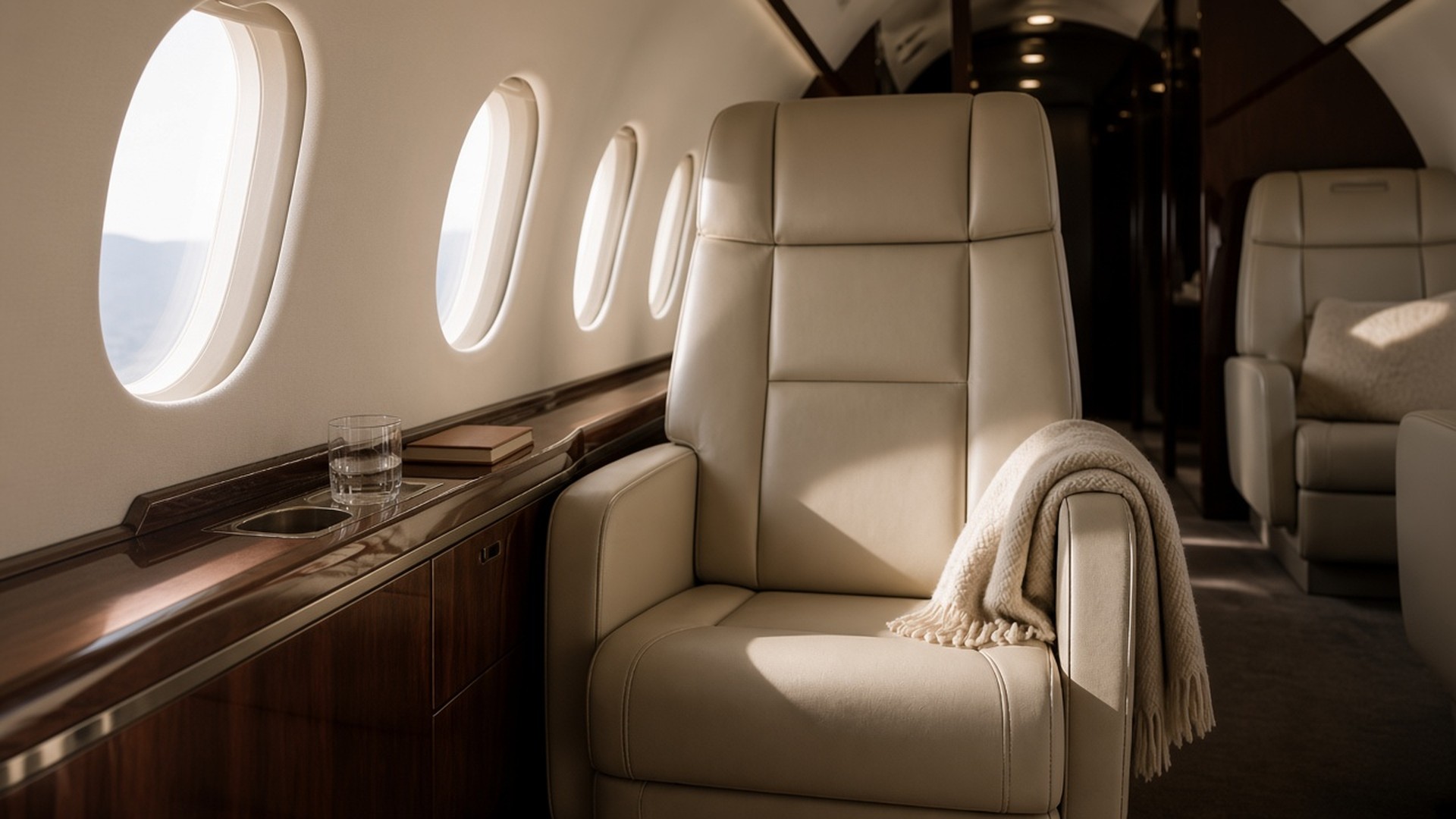
Private jet rental cost by aircraft type
Very light jets. Short hops, two to four passengers, regional day trips. They are cheaper because the cabin is small and they burn less fuel. Fine for a business hop. Wrong if you have bags, dogs, or six people.
Light jets. Four to seven passengers, short to medium sectors. This is the category most empty-leg boards are full of — Citations, Phenoms, the metal that actually repositions.
Midsize. Six to nine passengers, more range, more hold. The hour costs more. You pay it when the light jet cannot make the sector without a fuel stop you do not want.
Super-midsize. Eight to ten passengers, longer legs, higher cruise. Useful when the route is closer to a coast-to-coast than a lunch run.
Heavy jets. Ten to sixteen passengers, stand-up cabin, real baggage. Ultra-long-range metal is for intercontinental work. The hour looks brutal until you count the fuel stops you are not making.
What is in the quote — and what is not
The hour is not the price. Ask whether the number is all-in.
Usually in: the aircraft, the crew, standard insurance, a basic cabin service. What that service actually is varies. Do not assume a kitchen.
Often extra, and large enough to wreck a comparison:
- Repositioning — the ferry to you, and often the run home after a one-way
- Landing fees and FBO handling. Two airports in the same city can print different totals
- Overnight crew and parking if the jet waits for you
- Catering beyond whatever came with the aircraft
- De-icing, in season, which is not a rounding error
- Wi-Fi, if it is billed rather than included
- Taxes, which follow the itinerary, not the brochure
If two quotes are a long way apart, one of them is probably missing the empty legs you do not sit on.

What actually changes the bill
One-way versus round trip. A one-way can look cheap until the operator has to fly home empty. Round trips sometimes price better because the utilisation works. Sometimes they do not. Get both numbers.
Repositioning you never see. If the nearest suitable jet is two hours away, you are buying those hours. That is the largest quiet line in private jet rental cost.
Season and availability. Holiday weekends, ski weeks, and event cities tighten the metal and the rate. Booking earlier buys choice more than it buys a discount.
The airport. An FBO twenty minutes further out can save handling, or it can add a positioning sector. Do not pick the airport from a tourist map.
Bodies and bags. Charter “just in case” seats and you will be in the next category up. Match the cabin to the people who are actually flying.
Duty limits and fuel stops. Long missions can force a stop or a crew change. That is not a surprise to the operator. It should not be a surprise on your invoice.
A rough way to think about the total
Start with category and hours, then leave room for the extras. These are directional, not a quote.
- Short 1–2 hour sector, VLJ or light jet: several thousand to low five figures
- Medium 2–4 hours, light or midsize: often mid five figures once positioning and fees sit in
- Long 5–8 hours, super-midsize or heavy: high five figures into six
- Ultra-long-range international: frequently six figures and up
How to spend less
Book an empty leg when the leftover matches the diary. Empty legs — repositioning flights — exist because someone already paid for a one-way. If your route and window fit, the cabin can be a fraction of a commissioned charter. They are one-way. The time is set. They disappear when the originating trip slips. That is the product, not a catch.
EMPTY LEGS lists those leftovers from connected partners. Search the airports you can actually make. View the aircraft. Book via the partner who holds it. We do not take payment here. If nothing on the board fits, Ask can request an indicative charter quote from Villiers — that is the full-price product, and you should treat it as one.
Be willing to use the other field in the same city. A short transfer can be cheaper than dragging metal across a region.
Fly the smallest aircraft that actually fits. And do not make the jet sit for three days unless you like paying crew hotels and parking.
How much does it cost to rent a private jet for a day?
A “day” is usually several sectors plus waiting. The total is hours flown, category, and whether overnight expenses apply. Without a route, anyone quoting a day rate is guessing.
Is private jet charter priced per person?
Usually no. You are buying the cabin. Per-seat and shared products exist; they sit under different rules. If a listing does not say which, ask before you send money.
Are empty leg flights cheaper?
Often, yes — because the sector was going to fly anyway. The trade is flexibility. Compare an empty leg with the on-demand quote for the same type on the same route. If the meeting will not move, send the charter quote.
Do I pay for the jet to come and get me?
If it is not already at your airport, yes. Repositioning is standard. On a leftover, that empty run has already been paid for by the trip that created the sector. That is why the empty-leg fare exists.
Getting a real number
Price it the way the operator does. Category, hours, then repositioning and handling. If your dates can flex, search live empty legs first. If they cannot, charter it and stop forcing the leftover to behave like one.